

South East Queensland and Brisbane Property Market Wrap-Up 2025
As we close out 2025, South East Queensland once again stands out as one of Australia’s most resilient and strategically positioned property markets. Brisbane, in particular, has continued to consolidate its post-pandemic gains while transitioning into a more mature phase of the current growth cycle.
This year was defined less by rapid acceleration and more by structural strength. Limited housing supply, steady population growth and improving borrowing conditions combined to support prices, even as affordability and selling times normalised.
Below is a clear, data-driven snapshot of what shaped Brisbane and the broader South East Queensland property market in 2025.
Before exploring the key drivers behind Brisbane’s performance, here is a snapshot of how the market finished 2025.
Brisbane Property Market Snapshot – End of 2025
As of December 2025, Brisbane’s property market closed the year at record-high price levels, following another year of solid growth.
• Brisbane median house price: approximately $1.15 million
• Annual price growth (Brisbane dwellings): approximately 14–15% over 2025
• Market position: dwelling values at or near record highs by year end
• National comparison: one of the strongest-performing capital city markets in 2025
This snapshot reflects Brisbane’s continued market resilience through 2025, supported by sustained buyer demand, limited housing supply, and improving lending conditions later in the year.
Brisbane’s Market in Context
Brisbane remains one of only a handful of Australian capitals sitting at record-high dwelling values, underscoring its long-term appeal to both owner-occupiers and investors
Over the 12 months to June 2025:
- Annual dwelling value growth: 7.0%
- Quarterly growth: 2.0%
- Monthly growth (June): 0.7%
This performance places Brisbane among the strongest capital city markets nationally, alongside Perth and Adelaide, and well ahead of Melbourne, where values remain below prior peaks
Current Market Snapshot
Based on Cotality’s latest data, Brisbane’s 2025 market conditions reflect a controlled but confident environment:
Dwelling values: At record highs
- Sales activity: Slightly lower than the previous year, down 0.9%, indicating fewer forced sellers and a more deliberate buyer pool
- Median days on market: 25 days, up from 2024, signalling a more balanced negotiation environment
- Vendor discounting: Approximately -3.2%, still historically tight by long-term standards
While properties are taking slightly longer to transact, price integrity has remained intact.
Supply Constraints Continue to Define the Market
One of the most important forces underpinning Brisbane prices in 2025 has been ongoing supply restriction.
Nationally, new listings fell to their lowest seasonal level since 2020, with stock levels sitting 11.7% below last year and 9.2% below the five-year average.
Total listings also remained materially constrained, sitting 16.7% below the five-year average, despite modest seasonal rebounds.
At the same time, dwelling approvals continue to lag well behind what is required to meet Australia’s housing targets, remaining 23.9% below the national housing accord benchmark.
For Brisbane, this imbalance between demand and new supply remains one of the strongest long-term price supports.
Buyer Behaviour and Market Segmentation
A key theme in 2025 was outperformance at the more affordable end of the market.
Across capital cities, the lowest quartile of property values continued to record stronger growth than higher-priced segments, reflecting:
- Ongoing affordability constraints
- Investor focus on yield and entry-level opportunities
- First and second-home buyer activity prioritising value over size
This trend remains particularly relevant in Brisbane, where demand for well-located houses and townhouses in inner and middle-ring suburbs continues to outstrip supply
Rental Market Conditions
Rental conditions eased slightly in 2025 but remain tight by historical standards.
- National rental growth: 3.4% annually, lower than 2024 but still above the pre-COVID average
- Gross rental yields: Holding steady at 3.7% nationally, with Brisbane remaining attractive for yield-focused investors
With value growth beginning to re-accelerate and rents stabilising, yields may compress modestly moving forward, particularly in premium locations.
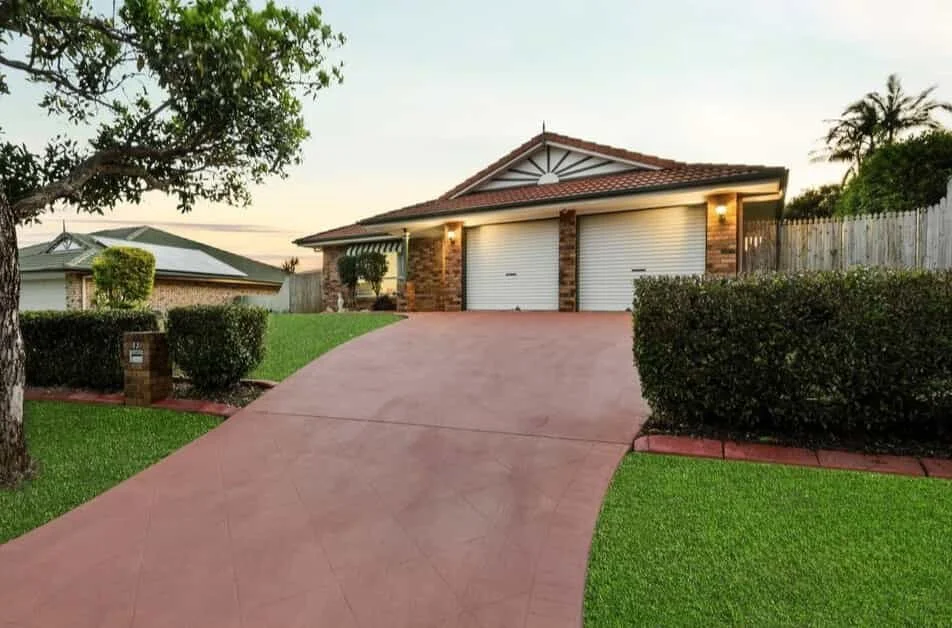
An established brick home in a Brisbane suburb, representative of the type of family housing that continues to underpin demand across South East Queensland.
Interest Rates and Lending Environment
The interest rate environment shifted meaningfully over the course of 2025.
- The RBA cash rate was reduced to 3.85% by July 2025, contributing to improved borrowing conditions
- Average variable rates for new loans declined over the year:
- Investors: approximately 6.03%
- Owner-occupiers: approximately 5.83%
Improved lending conditions supported buyer confidence, particularly in the second half of the year. Investor participation remained elevated, accounting for 37.9% of total new lending, above the long-term average, reinforcing Brisbane’s appeal as a strategic investment market.
Outlook for 2026
Looking ahead, Brisbane enters 2026 with fundamentals firmly in its favour:
- Chronic undersupply of new housing
- Population growth and lifestyle migration
- Steady borrowing conditions
- Sustained investor interest
- Strong performance across affordable and mid-priced segments
While price growth is expected to remain measured rather than explosive, the structural drivers suggest continued upward pressure over the medium term, particularly for quality homes in tightly held suburbs.
Final Thoughts
Brisbane’s 2025 property market was not about hype or speculation. It was about durability.
In a year marked by easing inflation, shifting interest rates and cautious buyers, Brisbane proved once again why it remains one of Australia’s most compelling long-term property markets.
If you’d like tailored advice on Brisbane, Gold Coast or South East Queensland property, or want to understand how these trends apply to your specific property, we’re here to help.
Contact us today and let’s plan your next move with clarity and confidence.
Book a free property strategy call with Principal Nik Seirlis and Senior Agent Aika Seirlis
📞 1800 NTH STH | 07 3229 5000 | WhatsApp
Frequently Asked Questions
-
Yes. Brisbane dwelling values reached new record highs over 2025, recording annual growth of approximately 14-15%. While the pace of growth moderated compared to earlier post-pandemic years, price momentum remained positive, supported by limited housing supply and steady buyer demand.
-
For many buyers, 2025 offered a more balanced environment compared to earlier post-pandemic years, particularly in the first half of the year. While selling times lengthened in some segments, conditions tightened later in 2025 as buyer demand increased. Improved access to finance and interest rate reductions lifted confidence, and well-located homes in established Brisbane suburbs often attracted strong competition, with some properties selling above price expectations.
-
Brisbane’s market was underpinned by a combination of constrained housing supply, population growth, relative affordability compared to other capital cities, sustained investor interest and new government first-home buyer schemes such as 5% No LMI scheme or 2% Help-to-Buy scheme. New housing construction and approvals remained below the level required to meet long-term demand, continuing to place upward pressure on prices.
-
Rental growth eased in 2025 compared to previous years, but vacancy rates remained tight and rents stayed elevated. Brisbane continued to appeal to investors seeking stable rental demand, particularly in inner and middle-ring suburbs where rental supply remains limited.
-
Most indicators suggest Brisbane’s property market is likely to record moderate price growth into 2026. Steady borrowing conditions, ongoing supply constraints and high demand are expected to support values, although growth is likely to be more measured than in earlier stages of the cycle.
-
Inner-city and middle-ring suburbs with established housing, strong infrastructure, and lifestyle appeal continued to outperform in 2025. Detached houses in well-connected locations remained particularly sought after, while townhouses gained popularity in select inner suburbs as affordability pressures influenced buyer choices.
-
Interest rates played a key role in shaping buyer sentiment and borrowing capacity throughout the year. Rate reductions during 2025 helped stabilise demand and supported stronger market activity in the second half of the year as confidence improved.
-
Yes. Brisbane remained attractive for long-term investors due to strong rental demand, relatively competitive yields and ongoing population growth. However, careful suburb selection and a clear understanding of local market dynamics remains essential.
-
In 2025, Brisbane outperformed several major capital cities and remained one of the stronger performing markets nationally.
Unlike Melbourne, where dwelling values remain below prior peaks, Brisbane property values finished the year at record highs.
-
Working with a Buyer’s Agent or property professional who understands Brisbane’s suburb-level dynamics can help buyers and investors navigate a competitive market and make informed property decisions.
Disclaimer: The information in this market wrap reflects general trends and observations in the Brisbane and South East Queensland property market during 2025. While care has been taken to ensure accuracy, this content is not intended as personalised advice. Buyers, sellers and investors should obtain independent advice specific to their circumstances before acting on any information contained in this article.